
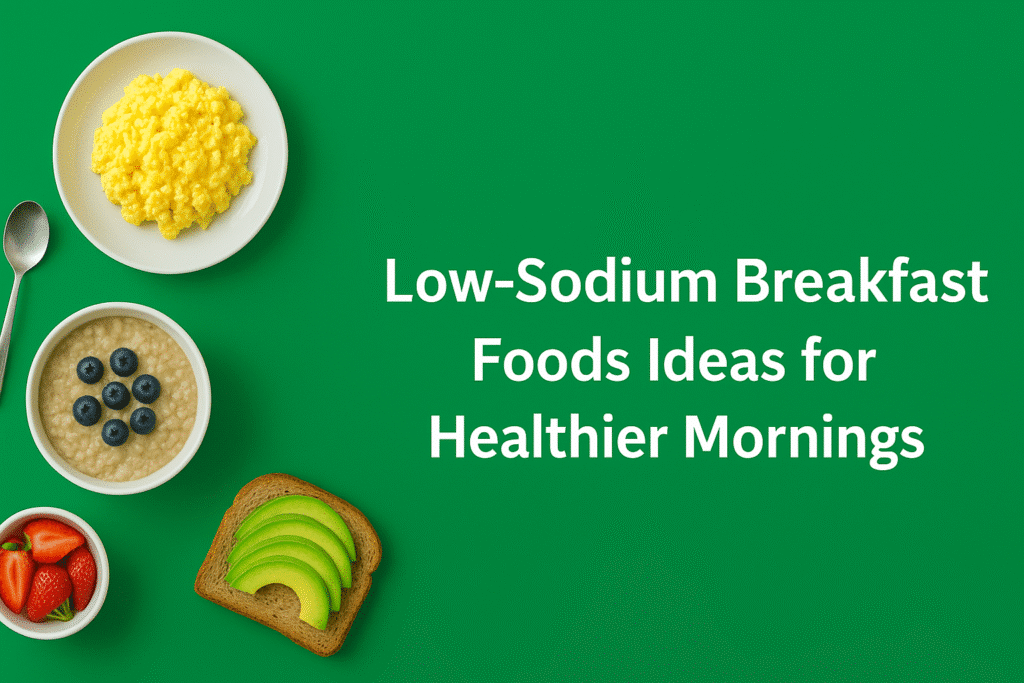
It’s common knowledge that eating wholesome, low-sodium breakfast foods is crucial to leading a healthy lifestyle. But it can be difficult to find healthy, low-sodium breakfast options, particularly for people with heart conditions or high blood pressure. Bacon, sausage, breakfast sandwiches, popular boxed cereals, and toaster pastries are just a few of the common breakfast staples that are often high in sodium.
This guide is created to assist you in building a smarter breakfast regimen. In the pages that follow, you’ll learn why decreasing sodium levels is beneficial and find a range of delicious, satisfying, and simple low-sodium breakfast foods. These suggestions are developed to satisfy your taste buds and nourish your body—so that you can begin each day in a manner that enhances your overall health and wellness.
Understanding Sodium and Its Effects on Health
Sodium is a nutrient that our body needs for many processes, including fluid balance, nerve impulses, and muscle contraction. While our bodies do require some sodium to function properly, the average person’s sodium intake is almost always excessive.
The biggest problem with too much sodium in your diet lies in blood pressure. If you eat a higher sodium diet, your body is forced to hold onto more water to “flush” sodium from your system. This is additional liquid that increases your blood volume, and therefore, puts more pressure on your blood vessels, creating hypertension (high blood pressure). If you experience hypertension for an extended amount of time, you place undue stress on the heart, arteries, kidneys, and brain—which leads to a higher risk of heart disease, stroke, and kidney failure.
Due to this risk, many health organizations ask the public to limit sodium intake. Following a low-sodium diet is an effective and important way to reduce blood pressure, while also protecting your health long term.
Creating Your Low-Sodium Breakfast
Assembling a healthy breakfast that is low in sodium is all about being smart. This means understanding what to decrease in your breakfast, such as ingredients, and what to increase in your breakfast.
Things to Avoid or Decrease
Many favorites are accompanied by sodium. Here are some of the most common breakfast staples:
Processed Meats: Usually, bacon, sausage, ham, and deli meats are treated by curing with a great deal of salt.
Salty Cheeses: Common breakfast cheese such as feta and halloumi, as well as processed will be higher in sodium.
Packaged Same and Processed Foods: Combinations like instant oatmeal packets, sugary cereals and frozen waffles, as well as convenience items like pastries from the grocery store, often have hidden sodium in packaged items.
Condiments: Ketchup, soy sauce, and sometimes specific hot sauces can be high in sodium and amp up a low sodium choice.
Ingredients to Include
Focus on fresh and whole foods when creating a delicious and nutritious breakfast.
Fruit and vegetables: Berries, bananas, apples, spinach, bell peppers, and mushrooms are all naturally low in sodium and rich in nutrition.
Whole grains: Rolled oats, whole wheat bread, quinoa, and brown rice are all fiber-dense and naturally low in sodium.
Unsalted nuts and seeds: Almonds, walnuts, chia seeds, and flaxseeds provide healthy fats, proteins, and crunch.
Lean proteins: Eggs are a great protein source, and if you want a lower sodium option, use mainly the egg whites.
Low-sodium dairy (or dairy-free) products: Plain Greek yogurt, milk, or unsweetened plant-based milks such as almond or soy milk can serve as a good base for a breakfast that is low in sodium and full of nutrition.
5 Simple Low-Sodium Breakfast Options
To help you get started, here are 5 easy and tasty breakfast options that are low in sodium.
1. Oatmeal with Fresh Berries and Unsalted Nuts
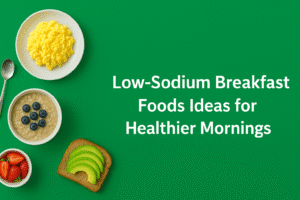
Cooking rolled oats with water or low-sodium milk/dairy substitute makes an excellent whole grain breakfast. Top with your favorite fresh berries, a dash of cinnamon, and a handful of walnuts or unsalted almonds. This will provide you with a breakfast rich in fiber, antioxidants, and healthy fats and is a filling and heart-healthy option.
2. Greek Yogurt Parfait with Honey and Fruit
Plain Greek yogurt packs a protein punch! Layer it in a glass with some mixed berries, sliced peaches, and a drizzle of honey or maple syrup for sweetness. You can also make this with an unsweetened coconut or almond-based yogurt for a dairy-free option. This is such a great and quick low-sodium breakfast idea that is refreshing and doesn’t involve cooking.
3. Homemade Breakfast Smoothie
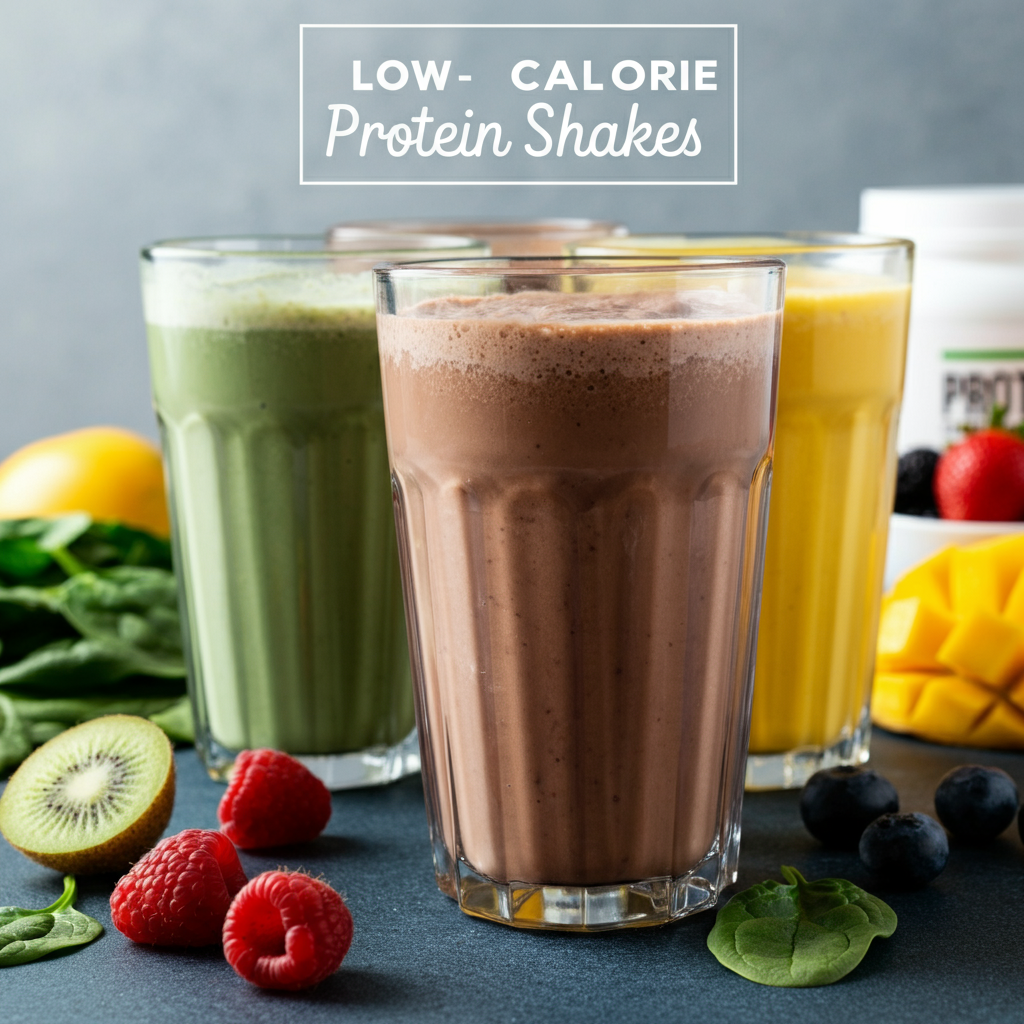
Smoothies offer a fantastic way to start the day while getting your nutrients in. Blend together spinach, banana, a scoop of unsalted almond butter and almond milk for a creamy homemade smoothie. There are many other lower sodium items you could add in as well like chia seeds or a scoop of plain protein powder to increase nutritional value.
4. Scrambled Egg Whites with Vegetables
Eggs are a classic breakfast item to enjoy. To keep sodium low, use just egg whites, scramble them up and add a variety of fresh vegetables, such as, diced bell peppers, onions and mushrooms. Instead of salt, season with black pepper, garlic powder and a bit of smoked paprika to boost flavor.
5. Whole-Grain Toast with Avocado
A simple piece of whole-grain toast mashed with avocado on top can be a great low-sodium breakfast that is still quick and satisfying. You can add red pepper flakes or a squeeze of fresh lemon juice instead of salt. This breakfast gives you healthy fats and fiber which will keep you feeling full and energized throughout the morning.
Ideas for Reducing Sodium at Breakfast
Changing habits is possible through a few sensible options.
Read Food Labels: Make checking sodium content a habit. Look for claims such as “low sodium,” “very low sodium” or “salt-free”.
Prepare Meals at Home: Preparing your meals yourself gives you full control over the recipe. This is crucial when it comes to finding low sodium options for fast food breakfast. Fast food breakfast is usually loaded with salt. A breakfast that you make yourself is usually a healthier option.
Use Herbs and Spices: Use seasonings that are salt-free to add flavor to your food. Fresh herbs such as cilantro and dill, or spices such as cumin, turmeric, and chili powder, can create a delightful dish without added salt.
Rinse Canned Foods: If using canned beans or canned vegetables, rinse them thoroughly under running water to reduce sodium content by 30-40%.
A More Healthful Morning Routine is Ready
Making a practice of a low-sodium breakfast is an important good health choice, especially for managing blood pressure and reducing the risk of heart disease. With fresh, whole food choices, and care around processed fit for a king food, you can prepare delicious and satisfying breakfasts.
Start by trying one or two ideas in this guide.Visit about herbs, spices, and fresh food varieties and begin exploring combinations you like best. A full flavored low sodium breakfast is not only possible but can be an enjoyable experience as part of your morning routine.
🥣 Low-Sodium Breakfast Foods Ingredients & Meal Ideas
| Category | Low-Sodium Options | Example Meal Ideas |
| Fruits & Vegetables | Berries, bananas, apples, spinach, bell peppers, mushrooms | Oatmeal topped with fresh berries; scrambled egg whites with veggies |
| Whole Grains | Rolled oats, whole-grain bread, quinoa, brown rice | Oatmeal with chopped nuts; whole-grain toast topped with avocado |
| Nuts & Seeds | Unsalted almonds, walnuts, chia seeds, flaxseeds | Smoothies blended with almond butter; oatmeal sprinkled with nuts |
| Proteins | Egg whites, plain Greek yogurt | Scrambled egg whites; Greek yogurt parfait with fruit |
| Dairy / Dairy Alternatives | Low-sodium milk, unsweetened plant-based milks (almond, oat, soy) | Smoothies, oatmeal, or yogurt parfait |
| Seasonings & Herbs | Black pepper, garlic powder, smoked paprika, fresh herbs | Scrambled eggs seasoned with paprika and garlic powder |
💡 This table offers a quick, practical overview to help readers spot low-sodium ingredients and easy breakfast combinations at a glance.
You can explore various diet plans, such as diabetes-friendly and low-calorie options, and track your daily calorie intake using our calorie calculator. Check out a research on a low-sodium diet by the University of California San Francisco.
Frequently Asked Questions (FAQs)
1. What does this diet prioritize?
The diet places an emphasis on whole and nutrient-dense foods while reducing processed ingredients. This may include more fruits, more vegetables, more lean protein, more healthy fats, and more complex carbohydrates in the pursuit of overall health and a healthy, balanced diet.
2. Are there foods that I should try and avoid?
In general, you should try to minimize food items that have added sugar, trans fats, or sodium. Packaged gourmet snacks, sugary drinks, and foods with excessive processing should ideally be consumed less often.
3. Can I tweak this diet if I have dietary restrictions?
Most definitely! Try substituting food items that suit your allergies, intolerances, or preferences. For instance, if you’re a vegetarian or vegan, try using plant-based protein forms instead.
4. How can I meal prep with this guide?
Meal prepping can be a snap with most food items on this guide. Make large batches of roasted vegetables, cooked quinoa, or scrambled egg whites, and use containers to portion them out. You can then pull together balanced meals easily throughout the week.
5. What portion sizes should I be using?
Portion sizes will depend based on your individual needs, including your age, physical activity, and goals for dieting. A licensed dietitian and/or nutritionist can help you determine what works best for you.
6. Is this diet a good option for weight loss?
Yes, this approach emphasizes filling, nutrient-dense foods. When combined with regular physical activity, this contributes to healthy weight management while avoiding empty calories.
7. Are snacks included in this diet?
Of course! Enjoy healthy snacks, such as a small handful of nuts, a Greek yogurt parfait, or toast made with whole-grain bread and almond butter to fuel your energy between meals.
8. How can I make the recipes more flavorful while keeping them healthy?
Add flavor by using fresh herbs, spices (like smoked paprika or garlic powder), and natural seasonings (like lemon juice) without unnecessary sodium or sugars.