
Naan vs Roti vs Chapati vs Pita vs Tandoori Roti: Complete Comparison, Calories, Flour Types & Best Uses
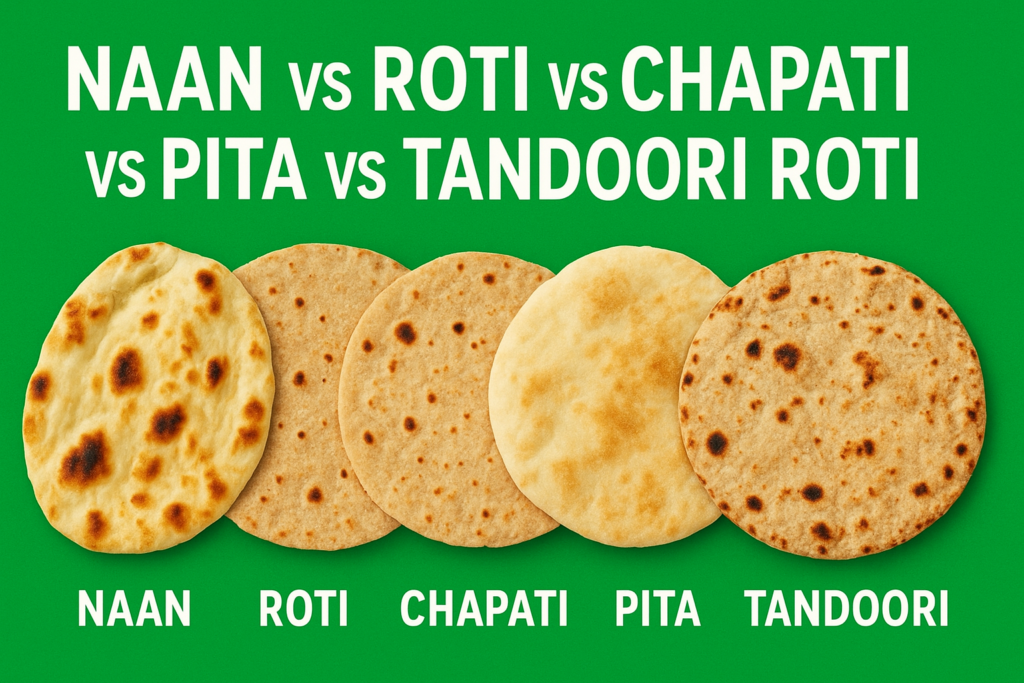
Flatbreads such as naan, roti, chapati, pita, and tandoori roti might look alike, but each uses different flours, cooking methods, and textures that change their calories and flavor. Even small changes in dough or heat can make a big difference.
This guide breaks down those differences with clear comparisons, practical tips, and nutrition details to help you pick the best bread for your health, taste, or next meal.
What Are Indian & South Asian Flatbreads? (Entity Definitions)
Naan
Naan is a leavened flatbread made with maida, yogurt or yeast, and cooked inside a tandoor, giving it a soft, fluffy texture. It is widely eaten in India, Pakistan, Afghanistan, and Central Asia, and the word “naan” comes from Persian meaning “bread.”
Roti
Roti is an unleavened whole-wheat atta flatbread cooked on a tawa and eaten daily across India, Pakistan, Nepal, Bangladesh, and Sri Lanka. The name comes from the Sanskrit word rotika, meaning “bread” or “round flatbread.”
Chapati
Chapati is a thinner, softer form of roti that often puffs over direct flame. The term is used in India, Pakistan, East Africa, and the Caribbean, and comes from the Hindi word chapat, meaning “flattened.”
Tandoori Roti
Tandoori roti is made from atta and cooked by pressing the dough onto the hot clay walls of a tandoor, giving it a smoky, firmer texture. It is most common in North Indian and Pakistani cuisine alongside rich curries.
Pita
Pita is a Middle Eastern flatbread baked at high heat, causing it to puff and form a pocket. Popular in Lebanon, Turkey, Greece, and the Mediterranean, “pita” translates to “bread” or “flat pie.”
Jowar Roti
Jowar roti is a gluten-free flatbread made from sorghum (jowar) flour, commonly eaten in Maharashtra and Karnataka. It is a traditional millet-based bread known for being high in fiber and naturally gluten-free.
Desi Roti
Desi roti refers to traditional home-style rotis made with atta, with thickness and texture varying by region or household. The word “desi” means “local,” “native,” or “traditional” in Hindi, Urdu, and Punjabi.
Naan vs Roti — Key Differences at a Glance
| Flour Used | Whole wheat (atta) | Refined flour (maida) |
| Leavened? | No | Yes |
| Calories | 70–120 | 200–300 |
| Fat Content | Minimal | Higher (ghee/oil/yogurt) |
| Cooking Method | Tawa | Tandoor |
| Texture | Thin & soft | Thick, fluffy, and rich |
Which One Is Better for You?
- Pick roti if you want a lighter bread that is higher in fiber and easier to digest.
- Go for naan when you’re eating creamy or rich dishes. Its soft, rich texture balances strong flavors.
Naan vs Roti: Which Is Better for Weight Loss or Weight Gain?
For Weight Loss
Roti—especially fine atta roti—is more suitable for weight loss because it aligns with the balanced eating approach recommended by the Harvard Healthy Eating Plate. Whole grains like atta are linked to stable blood sugar and higher satiety, and this is supported by nutrient profiles from USDA FoodData Central (external link).
For deeper details, see the full guide: Naan vs Roti Comparison (internal link).
For Weight Gain
Naan works better for weight gain because its enriched dough is naturally higher in calories and fat. A calorie surplus is essential for healthy weight gain, as explained by nutrition science. Pairing naan with high-protein curries also supports muscle gain. Muscle building requires sufficient protein intake along with calories.
For more insight, read: Naan Calories Explained (internal link).
Health Comparison: Naan vs Roti
| Calories | Low | High |
| Best For | Weight loss | Weight gain |
| Flour Type | Whole-wheat (fine atta) | Maida |
| Fiber | High | Low |
| Digestion | Easy | Heavy |
| Daily Use | Ideal | Occasional |
| Fullness | Long-lasting | Short-lived |
Chapati vs Roti for Weight Loss, Weight Gain & Wellness
For Weight Loss
Chapati is usually better for weight loss because it’s thinner, lighter, and has fewer calories per piece. Its softer dough and puffing over a flame make it less dense, so it’s easier to digest and good for low-calorie meals.
Roti can also work for weight loss, but since it’s a bit thicker, it’s more filling and has a few more calories.
For Weight Gain
If you want to gain weight, roti is a better option because its thicker dough and heavier pieces give you more energy. Eating roti with ghee, butter, or high-protein curries helps you get more calories than chapati.
Wellness Perspective: Chapati vs Roti
| Calories | Lower | Higher |
| Best For | Weight loss, light meals | Weight gain, daily meals |
| Digestion | Very easy | Moderate |
| Texture | Soft, airy | Firmer, more filling |
| Meal Fit | Breakfast or light dinners | Full meals with curries |
| Wellness Benefit | Lower calorie load | Better satiety |
Tandoori Roti vs Naan
For Weight Loss
If you want to lose weight, tandoori roti is a better choice. It’s made with whole-wheat atta, has very little fat, and loses extra moisture in the tandoor, so it’s lower in calories. Naan, on the other hand, uses maida, yogurt, oil, or ghee, which makes it higher in calories and fat.
For Weight Gain
If you want to gain weight, naan works better because it’s richer, softer, and has more calories. The mix of refined flour and added fats gives lasting energy and goes well with creamy curries, helping you eat more each day.
Wellness Comparison: Tandoori Roti vs Naan
| Calories | Lower | Higher |
| Best For | Weight loss | Weight gain |
| Flour Type | Whole-wheat atta | Maida |
| Fat Content | Minimal | Moderate to high |
| Digestion | Light, easy | Heavy for daily use |
| Texture | Firm, smoky | Soft, fluffy |
| Health Fit | Everyday meals | Occasional treat |
Naan vs Pita
For Weight Loss
For weight lossIf you want to lose weight, pita is usually a better pick because it’s lighter, lower in fat, and often made with whole or partly refined wheat flour. Its pocket shape also means each piece weighs less, which helps you eat fewer calories.da, yogurt, oil, or ghee, is richer and much higher in calories, making it less ideal for calorie-restricted diets.
For Weight Gain
If you want to gain weight, naan is better because it’s soft, dense, and has more calories. The extra fats and rich dough give quick energy and go well with creamy or protein-rich dishes, helping you eat more calories.
Wellness Comparison: Naan vs Pita
| Calories | Moderate–low | High |
| Best For | Weight loss | Weight gain |
| Flour Type | Wheat flour | Maida |
| Fat Content | Low | Moderate to high |
| Digestion | Light, easy | Heavier |
| Structure | Has a pocket | Dense & fluffy |
| Daily Use | Suitable | Occasional |
Desi Roti & Jowar Roti
Desi Roti (Health, Weight Loss & Weight Gain)
Desi roti, made with traditional whole-wheat atta, is light, low in fat, and great for weight loss. It gives steady energy, helps with digestion, and its fiber keeps you full, making it good for everyday healthy meals.
If you want to gain weight, desi roti can help when you eat it with ghee, butter, or high-protein foods. On its own, though, it has fewer calories than naan or paratha.
Jowar Roti (Health, Weight Loss & Weight Gain)
Jowar roti is naturally gluten-free, high in fiber, and excellent for weight loss, especially for people with digestive issues or those who prefer millet-based diets. According to the Celiac Disease Foundation, gluten-free whole grains like jowar are safe for people with gluten sensitivity. It digests slowly, stabilizes blood sugar, and keeps you full longer. If you want to gain weight, jowar roti isn’t very helpful because it’s low in calories and its heavy, filling texture makes it hard to eat a lot.
Wellness Comparison: Desi Roti vs Jowar Roti
| Calories | Moderate | Low |
| Best For | Daily healthy meals | Weight loss, gluten-free diets |
| Fiber | Moderate | Very high |
| Digestibility | Easy | Slow but healthy |
| Texture | Soft & light | Firm & rustic |
| Diet Fit | Most diets | Diabetes-friendly, gluten-free |
| Weight Gain | Possible with add-ons | Not ideal |
Which bread is healthiest? Most people just want a simple answer: which bread is healthiest and which one fits their goals?s?
For weight loss and general health, fine atta chapati, roti, or jowar roti are the best choices. They have fewer calories, lots of fiber, and are easy to digest. Tandoori roti is also healthy, but is more common in restaurants.
For weight gain or higher energy needs, naan is the top choice due to its higher calorie density, enriched dough, and fat content. It pairs well with creamy or protein-heavy dishes, making it an ideal option for those trying to increase their intake.
Final Comparison Table: All Flatbreads at a Glance
| Bread Type | Calories (Avg) | Best For | Weight Loss | Cooking Method |
| Roti | 70–120 | Everyday meals | ✔ Yes | Tawa |
| Chapati | 70–100 | Light meals | ✔ Best | Tawa + flame |
| Tandoori Roti | 100–150 | Healthy restaurant option | ✔ Good | Tandoor |
| Naan | 200–300 | Rich meals, indulgence | ✘ No | Tandoor |
| Pita | 165–170 | Wraps & sandwiches | ✔ Good | Hot oven |
| Desi Roti | 80–130 | Home-style meals | ✔ Yes | Tawa |
| Jowar Roti | 60–90 | Gluten-free diets | ✔ Excellent | Hot tawa |